

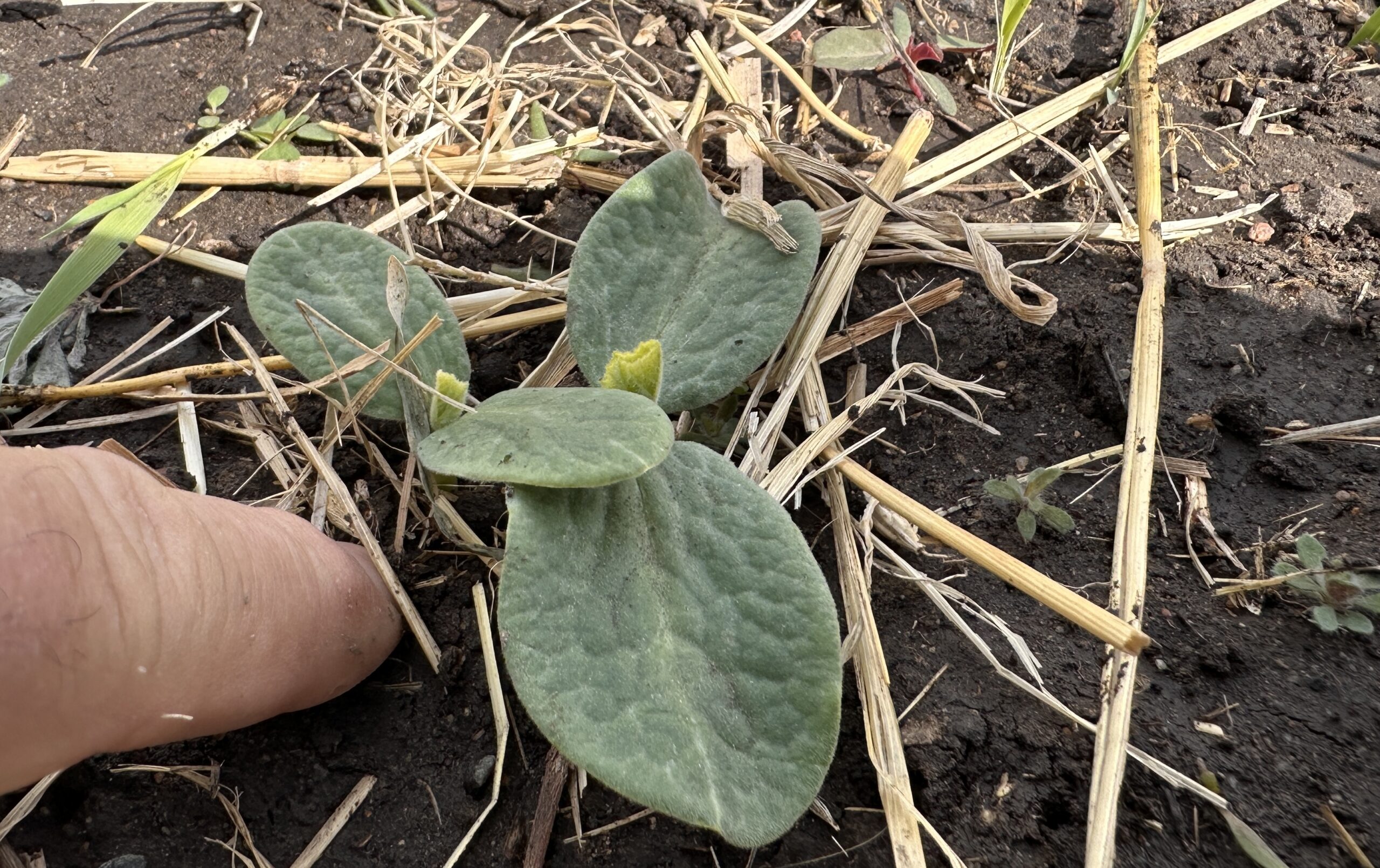
I have just done my daily peek at the vegetable garden we got planted (late) here in central Canada, full of excitement seeing the first sprouts of zucchini. After many years of planting seeds, it still feels like magic to see signs of growth.
That is the same feeling each day as I check in on the progress of nominations for the 2026 Open Education Awards for Excellence. You can blame me for overplaying the gardening metaphor with the thinking of making a nomination like planting a seed that grows into the recognition of people, projects, and practices in Open Education.
We urge you to consider planting your own seeds of recognition before the closing of nominations on June 19, 2026.
As of right now, we have collected 51 nominations, which to me the impatient gardener, is not enough! But my experience colleagues remind me that the vast majority each year come in closer to the deadline– which is only 14 days away, on June 19, 2026.
But what is noteworthy for our interest in global recognition is that so far, these nominations represent 23 different countries – Bangladesh, Canada, Colombia, France, Germany, India, Jamaica, Lebanon, Malaysia, Mexico, Nigeria, Pakistan, Palestine, Saudi Arabia, South Africa, Spain, Sri Lanka, Switzerland, Taiwan, Türkiye, United Kingdom, United States, and Venezuela.
I share now a few notes/observations from the person who is in the garden every day:
- Nominations need not be “big.” I suspect many might doubt how the person or the project compares to past winners. The “impact” a nominee has can be local, not well know, or just what you might consider “not award worthy”. Which leads to:
- It’s not about “winning.” I understand the reluctance to enter nominations if a person thinks it has little chance of winning an award. And while this is identified as an Awards program, the larger purpose is to recognize every person and project we can. When I started managing the awards, I was surprised that from hundreds of nominations, the focus was on the awardees. That is why we have started publishing details of all nominees, e.g from 2025, which we then highlight throughout the year. Think of the importance of recognition over winning.
- It’s fine to nominate yourself. A large number of submissions are self-nominations. I try to make the case that no one knows a nominee better! But it also suggests to me that as a field, we are lacking in reception of recognition.
- And it’s an act of grace to nominate someone else. Imagine the impact of being notified that a colleague, a member of the community, or perhaps someone you do know has nominated you for an award? A new feature this year is that if you do nominate someone/something else, you have the option to have them notified right away, and optionally to indicate it came from you. I encourage you to consider the potential effect of a surprise nomination.
- Know how nominations are reviewed. The awards process is made possible by a committee of past awardees and, new this year, representatives from OEGlobal members, who each review a set of nominations. For 2026 we share now a copy of the guide and rubric the committee uses in the review process. Nominations are evaluated based on alignment with Open Education Global’s Principles and Goals of Open Education.
- It’s fine to use Generative AI in your nomination. We have no rules againt using GenAI and ask only that a nominee indicated what they used and for what. I am working on a summary of the responses to this item from 2025, but from my own review, much of its use is to address challenges for those whose first language is not English, for fitting content to character limits, and to address the question about alignment with the OEGlobal principles and goals.
- It’s also fine not to stuff the form fields. I know a typical effort is to jam as much detail into the form as will fit, e.g. more is better. I can tell you from reading a few nominations this year that are more concise, it is much easier for our reviewers to understand.
- Write something that jumps out of the page. In scanning submissions I always pay attention to ideas, concepts that make me say… “Wow”. Make a strong case why a person or project should be recognized, a case that appeals to the humans reading your nominations.
I could go on endlessly here, but I can see I am tempted as always to use a big shovel.
But I just want to appeal to you to find a reason to take some time in the next two weeks to consider giving recognition to perhaps someone who supports your open education work. Or from a region of the world that we do not hear enough about. I am also asking in my communications to consider nominations for students who play roles in your creation of Open Educational Resources or implementation of Open Practices.
Please, consider submitting a nomination for the 2026 OEAwards. If you need inspiration, see our Stories of Impact, the Award Category Explorer, or even try the route of learning about a random past awardee.
Are you ready to plant a seed of recognition? Start with our 2026 Awards Nomination Guide or just go directly the nomination form. And then watch the seeds grow over the next few months as we announce all nominees, publish the short list of finalists in mid August, and announce the winners live in a web cast September 2, 2026.
Hmmm, the sun is out, I should go check the garden again.