

This article is part of Come Invent With Us: Perspectives On OEGlobal 2026, a series of viewpoints on OEGlobal 2026’s program tracks by the Open Education practitioners who make up the OEGlobal26 Host Organizations.
In this piece, Heather Blicher, Director of the Community College Consortium for OER (CCCOER)—OEGlobal’s North American node—reflects on the human connections, curiosity, and shared spaces needed to keep Open Education alive, even in demanding times.
__________________________
Lately, I’ve been thinking less about the structures that support Open Education (OE) and more about what keeps people engaged. While the structure and process are important, I find myself paying more attention to the human connections that make this work possible and the conditions that allow curiosity to thrive, even when Open Education is only one part of an already full workload for many in the field.
That may sound strange at a moment when conversations about Open Education (OE) are increasingly focused on technology, policy, and sustainability. Those conversations matter – hugely. But across webinars, conferences, brainstorming sessions, and collaborative projects over the past year, I’ve been noticing a consistent theme. Some of the most meaningful moments in OE (in my view) happen when people feel comfortable enough to ask questions they don’t have the answers to. That feels especially important right now in this moment in time, no matter where you’re located and what you’re experiencing. The curiosity people bring is more important to me than the answers being presented.
In this moment, many people working in OE are carrying significant exhaustion. Higher education overall is strained. Practitioners and advocates are navigating political pressure, economic uncertainty, technological change, and the ongoing challenge of sustaining community-centered work within a system that prioritizes speed and output over reflection and care. And along with that, groceries, gasoline, housing, and healthcare continue to strain budgets, and in this dystopian-leaning time, we also have responsibilities to our families, friends, and neighbors. To my fellow dystopian fiction fans- even my experience as a teen librarian immersed in this did not quite prepare me for the time we are living in. The reality of the everyday challenges cannot be ignored or minimized. But I’ve also noticed that sparks of creativity and connection often emerge precisely when people are given room to think together openly, informally, and without the pressure of perfection.
To me, that is part of what makes the OEGlobal 2026 track, “Catalyzing Human Connection, Creativity, and Curiosity to Thrive,” so compelling within the broader conference theme, Come Invent With Us! I don’t interpret that invitation as “come demonstrate expertise,” but something closer to “come think with us.”
Some of the most energizing exchanges in OE happen when new voices enter the space, people asking questions long-time practitioners may no longer think to ask (or answer). I continue to see this across community-led OER initiatives of all kinds, from local campus efforts to state, provincial, regional, and international collaborations. The people contributing to these conversations arrive with different experiences, roles, and perspectives. Some come through libraries, some through teaching and learning centers, some through equity work, and others through pathways I may never see. OE grows stronger when participation is not limited to a single type of expertise, institution, geography, or pathway into the work.
Accessibility and inclusion are a part of this, too. People are more likely to participate, experiment, and share ideas when spaces are designed with flexibility and many forms of engagement in mind. We engage differently depending on bandwidth, language, accessibility, institutional support, confidence, or simply whether we feel welcome speaking. Sometimes participation looks like asking a question in chat. Sometimes it looks like listening quietly while folding laundry. Thriving in OE depends, in part, on whether people feel there is room for them to participate imperfectly.
I’ve been thinking about this often through the connective work surrounding the initiatives and programming for OEGlobal, and specifically my role within the Community College Consortium for OER. My role is not to stand at the center of the conversation, but to help create conditions where others can share their experiences, questions, wins, and challenges with the broader community. If I’m doing my job well, people leave feeling a little less alone in their work. Looking back, the moments I remember most are rarely the polished presentations themselves. They are the moments in between and afterward, the chat discussions that occur while the presentation is happening, the brainstorming sparked by a difficult question, the relief people express when they realize others are wrestling with similar concerns, or the creativity that emerges when participants feel invited into the conversation rather than evaluated by it.
OE has always involved sharing knowledge. But more and more, I think it also involves sustaining the human connections that make curiosity, experimentation, and collective imagination possible in the first place.
As OEGlobal 2026 approaches, I hope this track creates space not only for new ideas but for the kinds of conversations that help people reconnect to why they entered this work to begin with. Open Education communities do important work, but they also help remind people why the work matters in the first place. In a time when so many demands compete for our attention, that reminder feels like something worth protecting.
__________________________
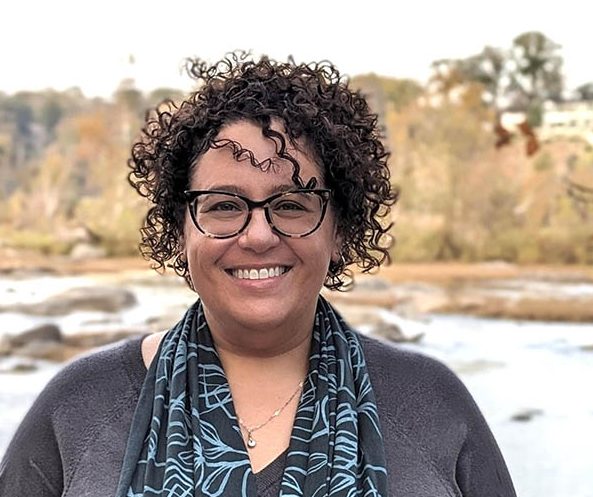
Heather Blicher is the Director of the Community College Consortium for OER (CCCOER), the North American node of OEGlobal. She supports Open Education communities through collaboration, learning, and global initiatives that connect practitioners across institutions and borders.
__________________________
OEGlobal 2026 — Come Invent With Us! takes place October 7–9, 2026, at MIT’s Samberg Conference Center in Cambridge, Massachusetts, in a hybrid format open to participants worldwide. The conference is co-hosted by Open Education Global (OEGlobal), MIT Open Learning, and the Massachusetts Open & Low-Cost Educational Resources Advisory Council (OLERAC), and marks the 25th anniversary of MIT OpenCourseWare. Learn more and register at conference.oeglobal.org.