
This article is part of the Open Education in Action series of stories about innovations, successes, and insights, told by the OEGlobal Member organizations and the Open Educators putting them into practice.
In this piece, Dr. Lauryn Oates — Executive Director of Right to Learn, a Canadian non-profit building open, multilingual courses for Afghan learners and educators through OEGlobal Member, Darakht-e Danesh Library — shares how listening first to refugee educators’ lived experience reshaped a new open course on Pedagogy of Care, and what happened when teachers put it into practice in their own classrooms.
__________________________
What does it take to design an educational resource that is not only evidence-informed, but also freely accessible to the educators who need it most?
That question guided our work in developing a new open course on the topic of Pedagogy of Care. Through a unique research project called Care-centred Networked Improvement Communities (CC-NIC), supported by Canada’s International Development Research Centre, Right to Learn created a new multilingual open course – designed specifically for educators working with refugee learners – hosted on our open courses platform for Afghan learners and educators, Darakht-e Danesh Courses. As with the other courses we host, this course is available in English, Dari (Afghan Farsi), and Pashto, making it accessible to educators across Afghanistan, Pakistan, and the wider region. It is also free, and openly licensed.
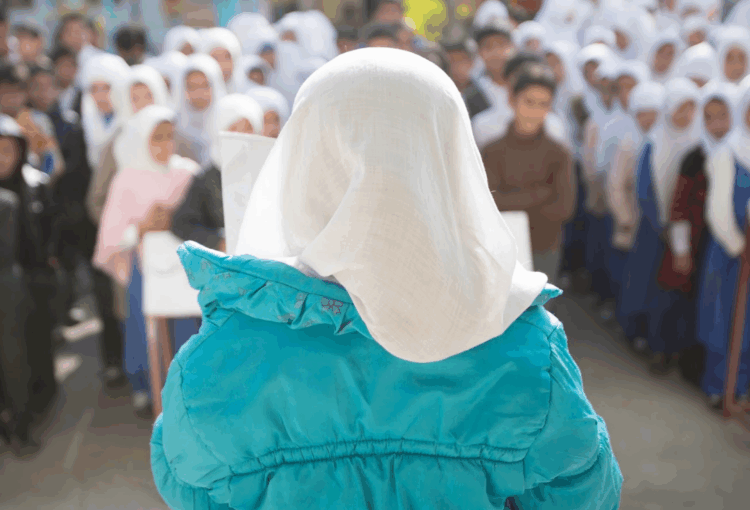
However, this course was different in many ways from our other courses, particularly when it came to the development process of the course. The course was originally conceived as one component of a teacher professional development program for Afghan refugee educators and their Pakistani colleagues working in UNHCR-supported schools in northern Pakistan. Rather than relying solely on existing theories of care, our team first undertook research to better understand teachers’ lived experiences. Learning of these experiences fundamentally changed the course content development.
We found educators working under extraordinarily challenging conditions. Many described overcrowded classrooms, limited teaching materials, uncertainty about their futures as refugees themselves, and the emotional demands of supporting refugee learners while navigating displacement themselves. These findings fundamentally reshaped the course we had planned.
Instead of presenting care as a set of classroom techniques, the final resource adopted a broader ethic of care, drawing on the work of scholars such as Joan Tronto and Nel Noddings. New modules were added on teacher self-care and wellbeing, supporting student mental health, and creating culturally inclusive learning environments. Activities were designed to help teachers translate concepts into practical classroom strategies while reflecting on their own professional identities and relationships with learners.
The result is an eight-module course that treats care not as an “extra,” but as a foundation for teaching in complex and crisis-affected contexts. This approach landed with the teachers. In interviews we carried out after Afghan and Pakistani teachers of refugee students completed the course, the teachers described shifts in their mindset and their pedagogical practice so transformative, that we came to think of the change as an ontological shift.
The initial cohort of teachers completed the course, while they simultaneously participated in Networked Improvement Communities (NICs), a form of peer learning groups guided by improvement science. Being grouped into NICs, each guided by a trained facilitator, had the teachers conceptualizing and then trying out specific actions that brought pedagogy of care into their classrooms. This approach helped bridge the content of the course, to its practical application in the classroom.
The changes teachers made were often small and practical, but responsive to individual learners. One teacher recognized that a student who was falling behind simply could not see the blackboard. Rather than viewing the child as a low achiever, as they stated they might have previously done, the teacher moved the student to the front of the classroom, incorporated video-based learning activities, and focused deliberately on rebuilding the student’s confidence. Another teacher addressed chronic absenteeism not through punishment, but by visiting the student’s home personally, reassuring the child that they would not be scolded for returning, and celebrating their renewed attendance with praise and small rewards. Other teachers described replacing harsh discipline with encouragement, creating friendlier classroom environments where mistakes became opportunities for learning rather than reasons for criticism. In their actions, the teachers put care into practice through practical decisions that made learning more inclusive, equitable, and effective.
After observing the course’s impact in refugee classrooms in Pakistan, we now hope to see its impact extend far beyond the original project. This is enabled by the course being an open resource. We revised the course content to be more “generic” and less specific to the context of educators of refugees in Pakistan, and more generally applicable to the experience of educators of refugees anywhere. Yet, we recognize that while there are many shared characteristics across different crisis and displacement contexts, each also has its own dynamics. Since the course is openly licensed, any educator, teacher trainer, NGO, university, or education ministry can customize it to fit their needs: they can freely access, adapt, translate, and reuse the materials to meet local needs.
For our particular context, multilingual access matters immensely. High-quality professional learning resources remain scarce in Afghanistan’s national languages. Offering the course in Dari and Pashto (as well as English) helps remove language as a barrier while supporting educators working across different contexts and linguistic communities.
Open educational resources have enormous potential in education in emergencies. They reduce costs, increase accessibility, enable localization, and support collaboration across borders. In contexts where educational opportunities are frequently disrupted, openly licensed resources can continue to reach educators wherever they are, and their open categorization allows for the all-important customized adaptation necessary to respond to educators’ context-specific local needs, including in a refugee context.
For us, openness is not simply about free access. It is about ensuring that knowledge created through research can become a shared public resource—one that educators can continually adapt, improve, and use to strengthen teaching and learning in their own communities, including in emergency settings, where education remains a right and an urgent necessity.
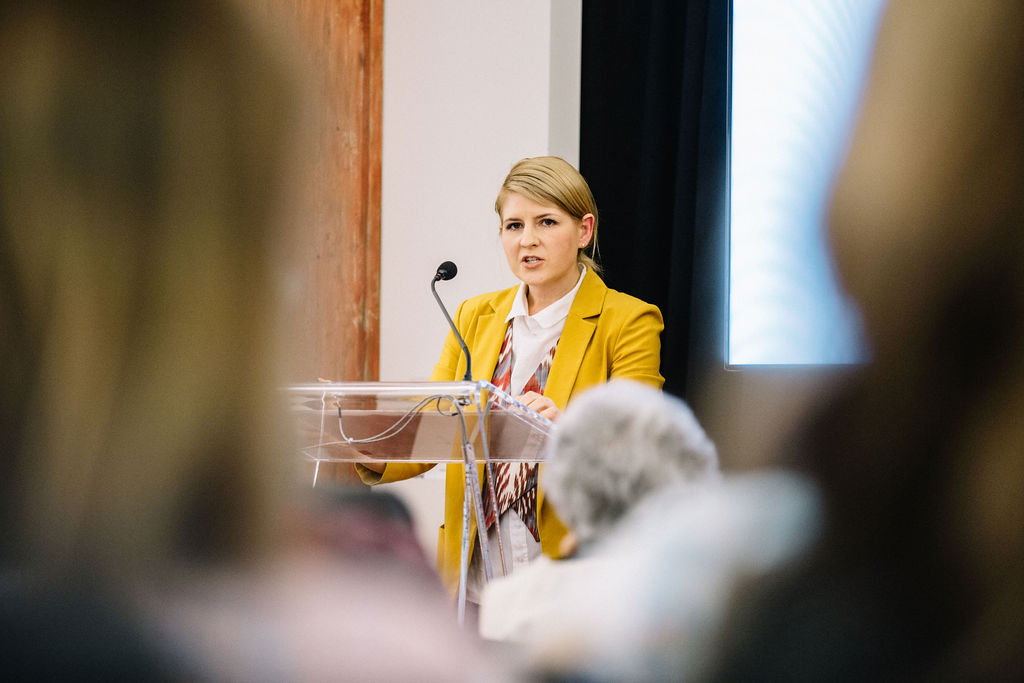
Dr. Lauryn Oates held various leadership roles within Right To Learn before becoming Executive Director in 2018. She holds a BA Honours in International Development from McGill University, an MA in Human Security and Peacebuilding from Royal Roads University, and a PhD in Language and Literacy Education from the University of British Columbia. She has worked with development organizations, multilateral agencies, and governments designing, planning, evaluating, or implementing education and gender equality programs, especially in war-affected countries. She has received several awards, including a Queen’s Diamond Jubilee Medal from the province of BC.


We hope you enjoy and appreciate the first of a new series of Open Education Global guest posts from our members (all members look soon for a message about sharing your Open Education in Action posts).
Our thanks to Dr. Lauryn Oates for writing this post, representing OEGlobal member Darakht-e Danesh Library. We have also scheduled her next month for a recording of an OEGlobal Voices podcast episode, so if you have comments/questions on this import work her organization Right to Learn is doing for refuge learners, please reply below.
Also note that the Darakht-e Danesh Library was nominated for a 2026 Open Education Award for Excellence, you can find even more information about this Open Asset in the published nomination.
Having members contribute stories is an excellent idea. I know from experience (with eg. the European Democratic Horizon project a few years ago) that getting members of consortia to contribute to outreach is sometimes like pulling teeth. But it’s worth doing.
This is a valuable example of how evidence-informed and context-responsive educational resources can make a meaningful difference, particularly in crisis and refugee contexts. I strongly agree that openness should go beyond free access to include adaptation, localization, and meaningful knowledge sharing.
This topic also resonates with my own research on refugee education. In a related study, I examined the effectiveness of a health-education-based training program in enhancing health empowerment among refugees in Jordan. It highlighted the importance of context-sensitive educational interventions in supporting refugee communities. (عرض المقالة)
Thank you for sharing this inspiring work and for highlighting the transformative potential of open educational resources.
Thanks @Downes for amplifying this story in OLDaily, always a big boost! https://www.downes.ca/post/79699 I am working to invite the project team into this space so maybe they can respond to your questions.
Brilliant initiative. Most open initiatives do not consider the language issue, which can be a barrier for many people, especially in underserved countries. I live in Brazil and that is why I am building an open platform available in 10 languages aimed at training teachers in the use of AI. https://edukors.org.