

This article is part of Come Invent With Us: Perspectives On OEGlobal 2026, a series of viewpoints on OEGlobal 2026’s program tracks by the Open Education practitioners who make up the OEGlobal26 Host Organizations.
In this piece, Alan Levine — Director of Community Engagement at Open Education Global (OEGlobal), and a veteran of online community-building since the early days of the web — gets honest about the real challenges of hybrid conferencing, and issues an open invitation to the community to help invent the OEGlobal 2026 experience together.
__________________________
From its very first announcement OEGlobal 2026 was described as being at Cambridge, Massachusetts and online as a hybrid conference. Hardly needing a definition, you may have seen the format in action at the 2024 and 2025 Open Education Conferences and many many other conferences.
At OEGlobal, like other organizations, we danced the conference pivot of 2020 to fully online during the COVID pandemic (e.g. OEGlobal 2020) and swinging back to in-person in the years since. In our recent conferences OEGlobal has aimed to provide connections to the in-person conference via our asynchronous community space and efforts live streaming between session meetups and online activities.
Hybrid. We know what it suggests. Coming from the world of plant and animal breeding, hybrid is described at Vocabulary.com as the “mixing of two different things, resulting in something that has a little bit of both.” For example take in Adam the Zedonk, a cross between a donkey and a zebra.
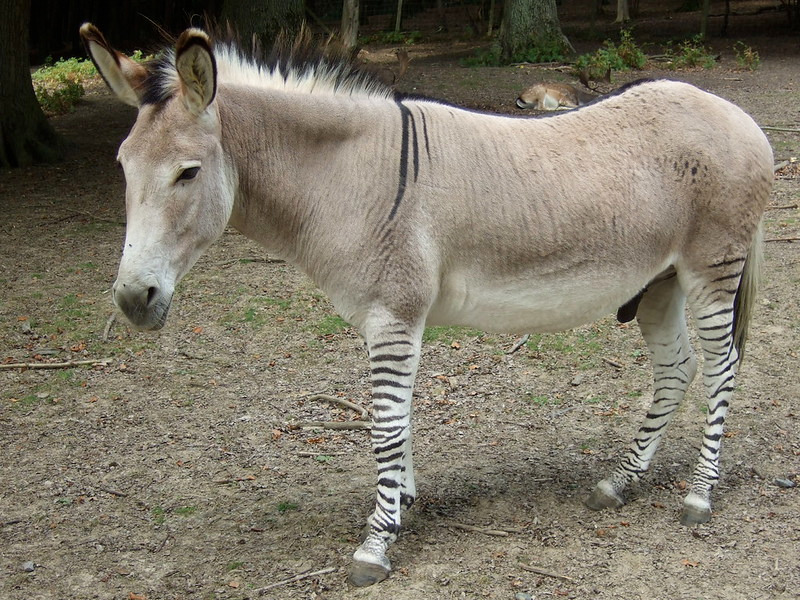
What happens when you cross the experience of being at OEGlobal 2026 in Cambridge and participating online? Are his striped legs an amusing oddity? Or maybe to Adam, it’s perhaps just how things are.
Often a hybrid conference strategy focuses on ways for the scheduled sessions to be “like” being there in person, seeing the slides, hearing the presenter, setting up the cameras and mics in the room to bring a presentation to an online screen. That’s doable and will be done for OEGlobal 2026. But can the hybrid experience go both ways, to create value in the experience for those in Cambridge? And what about all of the conference experience that happens outside of the sessions?
Once locations, venues, committees are set, the tendency in conference planning revolves around developing the program through call for proposals, reviews, and processing acceptances. For OEGlobal 2026, considerations for modality were built into the conference proposal with options for in-person, online, and hybrid options in submitting proposals. Speakers plans are changing. How the hybrid set up is done comes much later–like now for us!
I have few firm answers, hence as part of the conference theme, cast a call to collectively create a full experience for all attendees.
Considering the Affordances of Conferences
From the era of COVID conference pivots, an article that resonated long with me was by Dominik Lukes on Moving events online: Platforms, strategies and challenges. I note in particular Part 1 – Platforms, Strategies, Challenges where Lukes outlines from a physical design and human interaction perspective how the “affordances” of in person events influence the experience. This includes consideration of the spaces and times in which conferences happen, affordances of physical interactions with objects, and affordances of social interaction.
An online conference experience might be as different an experience as Adam’s striped legs for a donkey!
If you are fortunate to have funding to travel to the conference in Cambridge, you are pulled mostly away from home and work responsibilities and physically located in a space where the conference is the primary focus. Attending the conference online, you still may have meetings, project deadlines, grocery shopping, a dog to walk.
As an online participant, sitting alone in front of a screen, even with an open chat box, is extremely isolating, devoid of the social cues that happen between humans in the same physical space. Those who have presented online to an audience in a room know the disembodied experience of not being able to read and feel the room. At the same time, watching a presentation online happening in a room full of people limits you typically to only seeing perhaps the head of a speaker and/or slides. We lose nearly all of the human experience of “being there.”
Luke’s article also makes a case for considering the difference of affordances for just getting to sessions, in-person you are guided by signage, hallways, and just being aware of the movement of other people, all of which creates potential for more chance interaction with other attendees. I ponder the difference of being there in-person, getting to the room early, picking your seat, perhaps introducing yourself to someone adjacent. After a session, you may linger for more followup conversation, trade contacts, make plans to meet at the coffee break.
Consider an online session where you are initially sent to a silent waiting room only opened right as the session starts. Often but not always there is an open chat to make introductions, but it happens as the session unfolds. When the speaker ends, typically the organizer does the equivalent of turning off the lights and pushing you to the empty corridor “the host has ended the session”.
We are seeking ways for voices and questions from online participants to be heard in sessions, but even in person, the time challenge means most of the audience do not get an opportunity to be part of the conversation. The conference pace is rapid!
We cannot change these affordances but they are unavoidably built into our conference participating, in Cambridge or online.
Program Centering
The program becomes the core of the conference experience. It’s what draws our interest to attend, it helps justify making a case for obtaining travel funding, and the program schedule prescribes most of one’s time there.
It’s an arduous process to go from calls for proposals to publishing a program, from observing the planning of the last few OEGlobal Conferences, the planning team performs something I see as 9 dimension chess. Now that the OEGlobal 2026 program is available, I draw attention to the fact that every single presentation session/panel listed in the program will be available for online participants.
Much work is in process to set this up with planning for onsite audio/video, providing access to online participants, and organizing a large cadre of facilitators to provide a full experience to not only view, but to engage no matter where we are.
And consider the challenge of time. Being a global conference calls for finding ways to offset the time differences that make it a challenge to catch the live sessions in North American East Coast time for someone who is participating from the opposite side of the globe. How is that experience going to work?
Those who have been fortunate to attend in-person conferences know that much happens in the activities outside of the scheduled time slots. Figuring out how to provide the conference program is doable and being done, but what else can we invent to create more of the serendipity of meeting other attendees, expanding our own connections?
We were fortunate to hear the wisdom of Nicole Allen and the organizers of the Open Education hybrid Conferences as well as other organizers. We have been generating ideas at OEGlobal and in the discussions of the conference planning team. Yet as I write, it is almost the plane being built while flying (Adam is the pilot?).
The How of Hybrid Experiences
In the mixing of these affordances of in-person and online experiences, are you seeing perhaps any zebra stripes? They are far from comparable. But still we can and many organizers do take great effort to break down the differences in these affordances.
I’ve had the fortunate opportunity to fly around the world to attend conferences, and also participate in online/hybrid ones in more modes/platforms than I can name. I was part of organizing hybrid conferences in virtual worlds – yes, Second Life is now laughable but ask me some time about how well it created a presence that kept participants from leaving the venue (and yes, I know about platforms like Gather Town–they’re not the same). I can remember when the Platform “I will Only Call Twitter” was an effective connective channel to and from conferences. Yet long before its recent descent, we witnessed what went wrong in back channels for danah boyd at the 2009 Web 2.0 Expo. I’ve coordinated live blogging from conferences and been part of the DS106 community that for years set up live internet radio streams from conferences. I was part of the volunteers who from 2015-2023 offered hallway conversations via Virtually Connecting, doing them both remotely and on site at conferences. I am influenced by the approach of Equity Unbound of Intentionally Equitable Hospitality (IEH) described by Maha Bali and Mia Zamora in 2022:
IEH begins with the notion that the teacher or workshop facilitator is a “host” of a space, responsible for hospitality, and welcoming others into that space. IEH requires intentionality about who is involved in the design of that space, noticing for whom the space is hospitable and for whom it is not. IEH is iterative design, planning, and facilitation in the moment. It also includes the interactions outside of formal gatherings that influence formal, synchronous interactions.
Here is what we know right now. The program will include sessions for all audiences from presenters in Cambridge, from presenters online, and for several panels, a mixture of modes plus a collection of prerecorded lightning talks. All presentation style sessions will be available via Zoom to all registered attendees who will be able to plan their session attendances in Sched.
An exciting new development is we also have one planned satellite site originating in Vancouver sponsored by the Internet Archive Canada (full details in planning) to share the experience together but also from where some online presentations will originate, plus other locally planned activities.
The place for all audiences to meet and discuss is the OEGlobal 2026 area in our OEGlobal Connect online community. Like a conference venue, there will be a few specified “rooms” (see for example the spaces for OEGlobal 2024 and OEGlobal 2023) but as a social environment, the pulse activity is driven by participant action in threads they can join or start. There will be places to share highlights, resources, continue conversations as well as asynchronous connective activities for all participants. This year the front entrance will include basic welcome information, but access to all the inside spaces will be via invitation to registered attendees.
We can only build so much, how the experience plays out depends on participation and willingness to be part of it by attendees.
Invention
The hybrid conference experience is something we should and ought to do together–in the spirit of the OEGlobal 2026 theme, let’s invent it. With only my experiences to rest on, I feel unqualified to prescribe a formula for a hybrid conference. Many colleagues have relayed to me how difficult it is to do.
You can participate in an ongoing discussion started May 5 about experiences in hybrid conferences. We are also organizing in cooperation with Equity Unbound on August 6 a place to inform us with your ideas and conference activities in A Listening Session on the Hybrid Conference Experience with again follow up online discussion.
But here is the thing, most of the wide open education community may never have the support to attend an international OEGlobal conference in person. It was certainly out of my range prior to working for OEGlobal. I was part of a project recognized in 2017 with an Open Education Award for Excellence in Open Practices but lacked funding to be participate in the in-person conference experience in Cape Town. I never imagined a way that I could participate.
As challenging as it is, as a global organization we should do all we can to make participation openly possible as a hybrid experience, striped legs and all.
__________________________
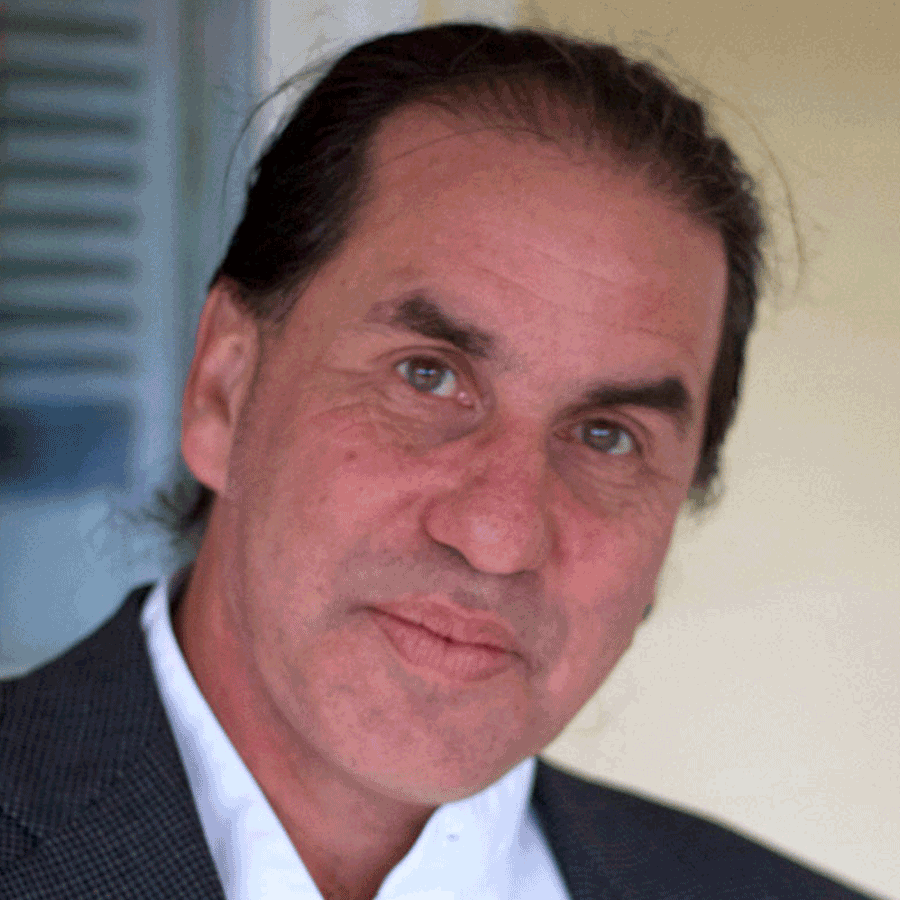
Alan Levine works as Director of Community Engagement for Open Education Global from his rural home outside of Moose Jaw, Saskatchewan, Canada. His excitement for sharing on the open web has not faded since plugging in a Mac SE/30 as a web server on the Maricopa Community Colleges network in 1993.
OEGlobal 2026 — Come Invent With Us! takes place October 7–9, 2026, at MIT’s Samberg Conference Center in Cambridge, Massachusetts, and in a hybrid format open to participants worldwide. The conference is co-hosted by Open Education Global (OEGlobal), MIT Open Learning, and the Massachusetts Open & Low-Cost Educational Resources Advisory Council (OLERAC), and marks the 25th anniversary of MIT OpenCourseWare. Learn more, view the program and register at conference.oeglobal.org.