
This article is part of Come Invent With Us: Perspectives On OEGlobal 2026, a series of viewpoints on OEGlobal 2026’s program tracks by the Open Education practitioners who make up the OEGlobal26 Host Organizations.
Chris Bourg, Director of Libraries at the Massachusetts Institute of Technology (MIT) and founding director of the Center for Research on Equitable and Open Scholarship (CREOS), and Amy Brand, Director and Publisher of the MIT Press, explore what it truly means to “hack” the open research and learning ecosystem — and why building trustworthy knowledge infrastructure matters more than ever in an age of AI.
__________________________
Open Education depends on open scholarship. To be truly open, open learning requires knowledge and learning materials that can be accessed, shared, reused, remixed, and built upon by anyone, anywhere.
Too often the outputs of research are locked behind paywalls, governed by unnecessarily restrictive licenses, or just not discoverable or accessible. When that happens, the vision and practice of open learning is thwarted, and knowledge can’t reach the teachers and learners who need it. At the MIT Libraries we know that open scholarship and open learning are interdependent, and we are relentless in our pursuit of open scholarship across every aspect of our organization.
One way we have hacked the open ecosystem is by recognizing that collection development and scholarly communications are inseparable. Rather than treat scholarly communications and open scholarship as a niche activity, we have placed it at the core of our collection development activities, ensuring that decisions about how we acquire and steward knowledge are grounded in principles of openness. We also treat open scholarship as an area of research in its own right. Through CREOS we study scholarly communications in order to provide rigorous research and data to inform decisions about advancing open scholarship.
We ‘hack’ the system beyond MIT by prioritizing open access in our publisher negotiations, by investing in open infrastructure, by supporting and rewarding open sharing of data, and by providing expert consultation and education to students, faculty, and peer institutions across the globe. These efforts are grounded in the basic tenet that knowledge is a public good.
That belief has long connected the MIT Libraries and the MIT Press. Together we see openness as not simply a matter of access, but also inextricably tied to support for the systems, practices and institutions that allow knowledge to be created, discovered, shared, reused, curated, validated and sustained. While the MIT Libraries work to open up the scholarly communications ecosystem, the MIT Press experiments with publishing models that extend the reach and impact of trustworthy scholarship.
–––
The work of “hacking” the open research and learning ecosystem begins with questioning long-standing assumptions about how knowledge is created, shared, and sustained. Openness is often equated with free access but making scholarly and educational resources available is only part of the challenge. The successful communication of knowledge depends on editorial judgment, production expertise, dissemination, and the institutions and infrastructures that establish credibility. Hacking openness, therefore, requires both reimagining participation and stewardship and investing in the systems that make knowledge accessible and trustworthy.
Progress in open education and research has always depended on experimentation. From MIT OpenCourseWare’s pioneering commitment to sharing educational materials freely to more recent efforts involving open textbooks, community-owned infrastructure, and innovative publishing models, advances have come from practitioners willing to test alternatives in public and learn from both successes and failures. Here at the MIT Press, initiatives such as our open monograph Direct-to-Open model reflect an effort to align broad public access with sustainable financial support. Such work demands transparency about goals, humility about assumptions, and a willingness to share process and outcomes.
The rise of generative AI makes the role of our credibility and quality in educational resources more critical than ever. Universities have historically underinvested in scholarly communication, even as commercial AI companies now derive substantial value from academic and educational content. While AI holds tremendous potential to broaden access to knowledge, it also poses difficult questions about sustainability, accountability, and new forms of commercial enclosure.
The defining challenge now for open research and open education is building trustworthy systems to distinguish verifiable knowledge from unreliable content before the difference becomes impossible to discern. Hence, the future of openness depends equally on expanding access and on strengthening the institutions, practices, and communities that make trustworthy knowledge possible. In that sense, libraries and university presses have equally important and complementary roles to play, because “hacking” the open ecosystem today requires not only making knowledge available to all, but also building the systems that ensure the credibility and sustainability of that knowledge.
__________________________
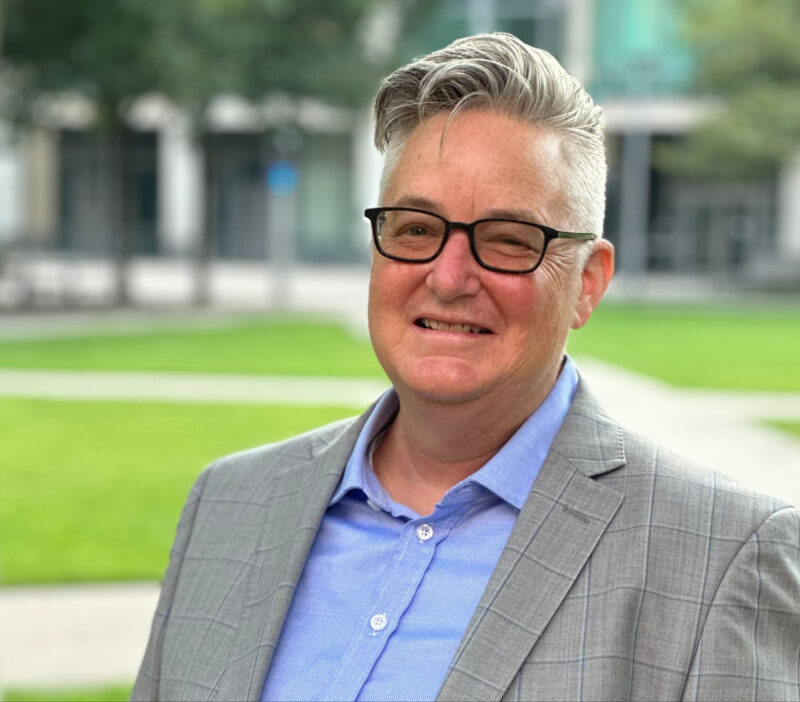
Chris Bourg is the Director of Libraries at Massachusetts Institute of Technology (MIT), where she is also the founding director of the Center for Research on Equitable and Open Scholarship (CREOS). Prior to assuming her role at MIT, Chris worked for 12 years in the Stanford University Libraries. Before Stanford, she spent 10 years as an active-duty U.S. Army officer, including three years on the faculty at the United States Military Academy at West Point. She received her BA from Duke University, her MA from the University of Maryland, and her MA and Ph.D. in sociology from Stanford.
Chris has extensive experience promoting equitable and open scholarship and is an advocate for the role of libraries in promoting social justice and democracy. Chris co-chaired the MIT Ad Hoc Task Force on the Future of Libraries, the MIT Ad Hoc Task Force on Open Access to MIT’s Research, and the MIT Working Group on Scholarly Content and Generative AI. She is a member of the National Academies of Science, Engineering and Medicine Roundtable on Aligning Incentives for Open Science, as well as the Higher Education Leadership Initiative for Open Scholarship.
Chris is a member of several advisory boards and steering committees, including Annual Reviews, Center for Open Science, and the Stanford Data Science Institute’s Center for Open and Reproducible Science (DSI-CORES).
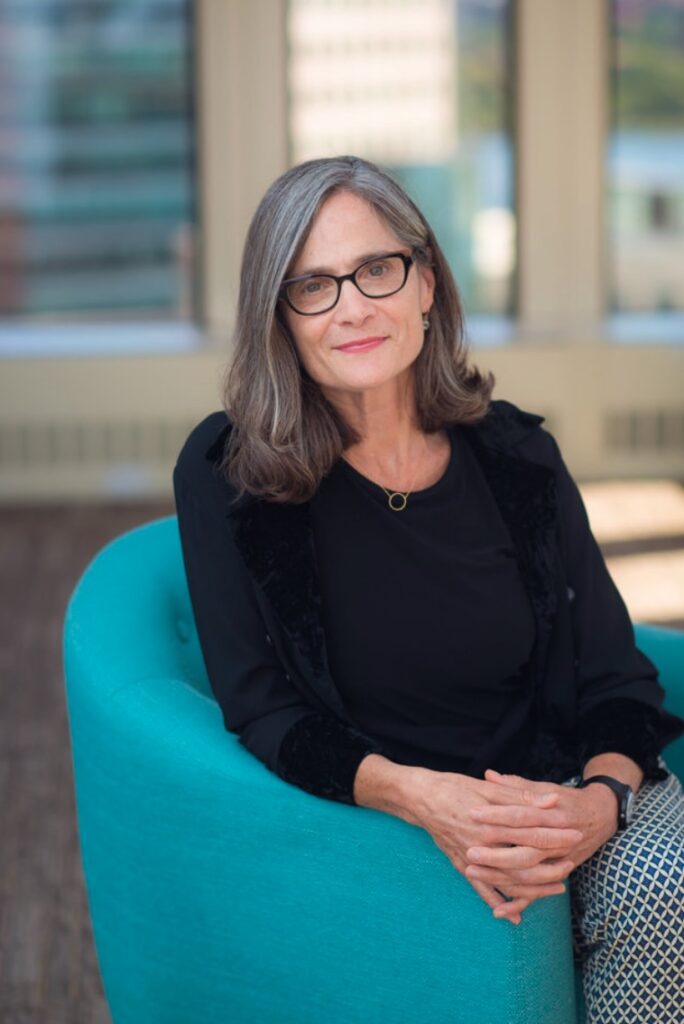
Amy Brand is director and publisher of the MIT Press, one of the world’s leading university presses and a pioneer in open publishing and scholarly innovation. She earned a doctorate in cognitive science from MIT and has held leadership roles across academia, research communication, and information infrastructure, including positions at the University of Pennsylvania, Crossref, Digital Science, and Harvard. Since returning to MIT in 2015, she has led initiatives advancing open knowledge, including co-founding the Knowledge Futures Group. Brand also served as executive producer of the Emmy-nominated documentary Picture a Scientist. Her honors include the Laya Wiesner Community Award, the AAAS Kavli Science Journalism Gold Award, and the Council of Science Editors’ Award for Meritorious Achievement.
__________________________
OEGlobal 2026 — Come Invent With Us! takes place October 7–9, 2026, at MIT’s Samberg Conference Center in Cambridge, Massachusetts, in a hybrid format open to participants worldwide. The conference is co-hosted by Open Education Global (OEGlobal), MIT Open Learning, and the Massachusetts Open & Low-Cost Educational Resources Advisory Council (OLERAC), and marks the 25th anniversary of MIT OpenCourseWare. Learn more and register at conference.oeglobal.org.